
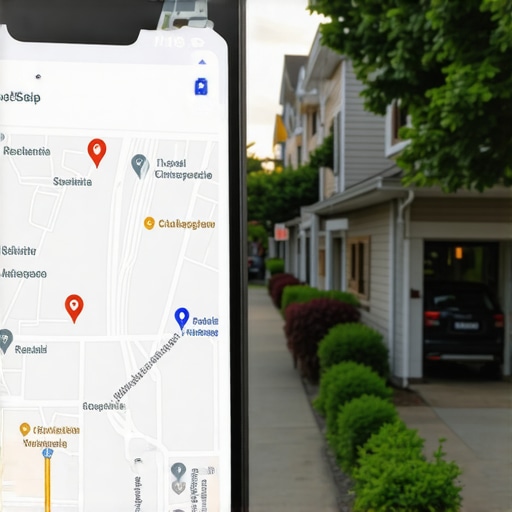
Why Most Local SEO for Chiropractors Fails to Pull Patients From the Map Pack
Imagine a potential patient in your city. They woke up with a sharp, stabbing pain in their lower back. They reach for their phone and type “chiropractor near me” or “best chiropractor for sciatica.” In that moment of acute distress, they aren’t scrolling to page two of the search results. They aren’t even looking at the organic listings below the map. They are looking at the Top 3 results in the Google Map Pack. If your clinic isn’t there, you don’t exist to that patient. Period.
For years, local seo for chiropractors has been sold as a simple checklist: get some reviews, make sure your NAP (Name, Address, Phone number) is consistent, and post a few blogs. But here is the cold, hard truth: those 2020 tactics are failing in a 2026 algorithm. While the foundation of google business profile seo still rests on the classic trio of proximity, relevance, and prominence, these factors are being radically redefined by AI-driven filters and aggressive verification hurdles. If you are frustrated by stagnant rankings despite “doing everything right,” it’s because the goalposts haven’t just moved – they’ve been replaced.
The Proximity Trap: Why Your Practice is Invisible 5 Miles Away
The most common complaint I hear from clinic owners is: “I rank #1 when I’m standing in my parking lot, but as soon as I drive three miles away, I disappear.” Welcome to the “Proximity Purge.” In 2026, Google’s AI radius caps have become incredibly tight. Google is no longer interested in showing a patient a chiropractor ten miles away if there are five “good enough” options within two miles. This is a direct response to user behavior – people want convenience, and Google’s job is to provide the most convenient, relevant answer.
Many practitioners fall into the proximity trap by trying to rank for an entire metropolitan area. They use city-wide keywords and hope for the best. However, what we are seeing now is “Proximity Bleed,” where visibility drops off a cliff the moment a user crosses a neighborhood boundary. This is because the algorithm is prioritizing hyperlocal relevance over broad authority. If your google business profile seo strategy doesn’t account for the physical barriers and neighborhood clusters around your office, you are fighting a losing battle against the radius cap.
To combat this, you need to understand Why Your Business Profile Fails the Proximity Test and How to Fix It Fast. It isn’t just about where your office is located; it’s about how Google perceives your “area of influence.” If your digital footprint – your reviews, your photos, and your local citations – only points to a generic city name rather than specific landmarks and neighborhood identifiers, the AI will default to a narrow, one-mile radius around your front door. Breaking out of that circle requires a technical shift in how you anchor your practice to the local geography.
The “Checklist” Fallacy: Why an Optimized Profile Isn’t Enough
There is a dangerous myth in the marketing world that “optimizing” your Google Business Profile (GBP) is a one-time task. Agencies will charge you a fee to fill out every field, add some services, and upload ten stock photos of people smiling while getting adjusted. This is the bare minimum. In 2026, an “optimized” profile is the baseline for entry, not the secret to ranking. The algorithm has moved past simple data entry into the realm of “Visual Storytelling” and AI-verified engagement.
Google’s Vision AI now analyzes the images you upload to your profile. If you are using the same stock photos of a spine model that 500 other chiropractors are using, you are signaling to Google that your practice lacks authenticity. The 2026 user – and the AI audits that serve them – are looking for the authentic patient journey. They want to see your waiting room, your adjustment tables, and your staff in action. This level of google business profile optimization is what separates the practitioners who get clicks from those who just get “views.”
Furthermore, the checklist approach ignores the frequency of updates. A profile that hasn’t had a new photo or a “Google Post” update in three weeks is considered “stale” by the algorithm. In a competitive field like chiropractic care, staleness is a ranking killer. You need to treat your GBP like a social media feed that directly impacts your bottom line. If you aren’t showing constant activity, the AI assumes your business is less relevant than the clinic down the street that is posting daily patient success stories and health tips. You must Transform Your Map Pack Rankings by moving beyond the checklist and embracing a dynamic, content-first approach to your profile.
Technical Roadblocks: Suspensions, Verification Loops, and AI Audits
In the current landscape, the biggest threat to your Map Pack dominance isn’t your competitor – it’s Google’s own automated enforcement. According to research from Stan Ventures and other industry leaders, GBP suspensions are at an all-time high. Google has deployed aggressive AI audits designed to root out “spammy” listings, but these bots often flag legitimate chiropractic clinics by mistake. Many owners only realize there is a problem when their listing suddenly disappears from search and maps, leading to a catastrophic drop in new patient leads.
The dreaded “verification loop” is another technical hurdle that can paralyze a practice. You try to update your address or phone number, and suddenly Google demands a video verification. You submit the video, and it gets rejected. You try again, and you’re stuck in a support loop with no human contact. This happens because Google’s automated systems have detected a discrepancy in your data somewhere on the web. This is why technical google business profile optimization is so critical; your data must be bulletproof across all platforms to avoid triggering these AI red flags.
If you find yourself in this position, you need to know How to Recover a Suspended Google Business Profile Without the Support Loops. The process is no longer about just asking nicely; it’s about providing an undeniable paper trail of your business’s physical existence and compliance with Google’s ever-changing policies. Failing to adhere to these strict guidelines results in immediate removal, and in the world of local search, a suspension is the equivalent of a digital death sentence for your practice.
Beyond the “5-Star” Review: Trust Signals vs. Review Counts
We’ve all seen it: a chiropractic clinic with 200 reviews and a 4.9-star rating is being outranked by a competitor with only 50 reviews. This drives doctors crazy. They ask, “How is that possible?” The answer lies in the difference between review quantity and review quality (as defined by AI trust signals). Google’s algorithm has become incredibly sophisticated at detecting “Review Velocity” and “Keyword Diversity.”
If you get 50 reviews in one week and then nothing for three months, that is a red flag for manipulation. Google prefers a steady, natural “velocity” of reviews. More importantly, the content of the reviews matters more than the stars. If your reviews all say “Great doc!” or “Highly recommend,” they provide very little SEO value. However, if a patient writes a detailed review saying, “Dr. Smith helped me with my chronic lower back pain using spinal decompression in Downtown Chicago,” that review is a goldmine. It contains proximity, relevance, and service-based keywords that the AI uses to verify your expertise. To track these nuances, savvy practitioners use advanced local seo ranking tools to monitor how their review profile compares to the competition.
This is where the “Conversion Gap” comes into play. SEO might get you into the Top 3, but your reviews must convert that view into a phone call. We often see the “Why Most Chiropractic Practices Lose 60% of Patients After Visit 3” phenomenon in marketing as well – if your profile looks “manufactured” or lacks recent, detailed feedback, patients will skip over you for the clinic that feels more authentic. You need to rank google business profile results based on trust, not just numbers. Focus on encouraging patients to mention their specific symptoms and the neighborhood they live in within their reviews to create a powerful, localized trust signal.
Hyperlocal Content: Why Your Blog is Failing Your Map Ranking
Most chiropractors are wasting their time writing generic blog posts like “The Benefits of Stretching” or “What is a Subluxation?” While this content might be okay for your current patients, it does absolutely nothing to help you rank higher on google maps. Why? Because it lacks “Geo-Targeting.” Google doesn’t need another article on stretching; it needs to know that you are the authority on chiropractic care in your specific neighborhood.
To move the needle on the Map Pack, your content strategy must be hyperlocal. Instead of a generic post on sciatica, write about “The 5 Most Common Sciatica Triggers for Office Workers in [Your Neighborhood Name].” Mention local landmarks, nearby gyms, or specific local events. This creates a digital association between your clinical expertise and your physical location. When Google’s bots crawl your site and find these localized signals, they are much more likely to boost your prominence in the Map Pack for that specific area.
Many practices find that Why Your Geo Pages Are Not Moving the Needle on Maps is due to a lack of “Entity Association.” You can’t just slap a city name at the end of a paragraph and call it SEO. You need to build a content web that links your services to the local community. If your website and your GBP aren’t speaking the same local language, the algorithm will struggle to place you in the Top 3 when a user searches from a nearby street corner.
The 2026 Roadmap: How to Reclaim the Map Pack
The era of “set it and forget it” local SEO is over. To dominate the Map Pack in 2026, you need a forward-looking strategy that anticipates AI search filters and prioritizes technical health. You cannot rely on a marketing agency that is still using a 2020 playbook. You need to actively manage your proximity signals, engage in visual storytelling, and maintain a perfect technical profile to avoid the “Proximity Purge.”
Here is your roadmap for the next 12 months:
- Audit Your Technical Health: Use a google business profile audit tool to identify any discrepancies in your NAP data or potential suspension triggers.
- Focus on Review Quality: Implement a system to solicit reviews that include specific keywords (services and locations) rather than just five-star ratings.
- Hyperlocal Content: Stop the generic health tips. Build out geo-specific pages that anchor your practice to the surrounding neighborhoods.
- Visual Authenticity: Replace every stock photo on your profile with high-quality, original photos and videos of your actual clinic and staff.
- Monitor Proximity: Track your rankings at the street level, not just the city level, to identify where your “Proximity Bleed” is occurring.
If you are seeing 3 Reasons Your GMB SEO Campaign Isn’t Generating Real Phone Calls, it’s likely because you’ve hit a ceiling with traditional tactics. Reclaiming your spot in the Top 3 requires a specialized approach. Whether you choose to do it yourself or hire a professional google maps ranking service, the goal is the same: stay visible, stay relevant, and stay in the Map Pack.
Local SEO is no longer a luxury for chiropractic clinics; it is the lifeblood of your new patient pipeline. As Google continues to tighten its filters and lean into AI-driven audits, the gap between the “Top 3” and everyone else will only widen. Don’t let your practice fall into the “Proximity Trap.” Take control of your rank google business profile strategy today and ensure that when a patient in pain searches for help, your clinic is the first one they see.
If you’re ready to bypass the 2026 proximity filters and secure your clinic’s future, it’s time to stop guessing. Audit your profile, fix your technical roadblocks, and consider a specialized gmb ranking service to ensure your practice remains the go-to choice in your community.
This post hits the nail on the head about the need for hyperlocal SEO strategies for chiropractors. I’ve seen firsthand how simply relying on old checklist tactics like reviews and NAP consistency no longer cuts it in 2026. The emphasis on visual storytelling and authentic content really makes sense, especially with Google’s Vision AI analyzing photos for authenticity. I’ve been pushing practices to regularly update their photos and share behind-the-scenes videos, which has noticeably improved their local visibility.
One challenge I’ve encountered is maintaining consistent, high-quality content that truly localizes the practice without sounding forced. Has anyone found effective ways to create engaging, hyperlocal content that resonates with the neighborhood crowd and builds genuine community trust? It feels like building that digital neighborhood actually helps boost proximity signals. Would love to hear how others are approaching this in their practice marketing.
This article really hits home about the importance of hyperlocal SEO in 2026. I’ve experienced firsthand how simply optimizing a profile isn’t enough anymore—Google’s AI now values authenticity and ongoing engagement far more than static data. I’ve noticed that practices which focus on genuine, high-quality visuals and regularly updated content tend to rank higher and attract more local patients. It’s quite the shift from the old checklist mentality, which sometimes felt more like checkbox ticking.
One thing I’ve found challenging is staying consistently active with fresh, localized content without it feeling forced or overly promotional. Does anyone have tips on balancing service updates, community stories, and personal touches without overwhelming their audience? I think community involvement and highlighting local events could be a great way to build trust and improve proximity signals naturally. Would love to hear how others are integrating real community elements into their SEO strategy.
This post really underscores the evolution of local SEO and how essential hyperlocal engagement has become. I’ve seen clinics that relied solely on classic optimization techniques suddenly lose visibility because they didn’t adapt to the AI-driven filters and proximity caps. Adding genuine, behind-the-scenes content such as staff introductions, local event participation, or patient success stories in specific neighborhoods can really boost authenticity in the eyes of Google’s Vision AI. It’s interesting to note how visual storytelling now matters even more than keyword stuffing.
However, maintaining this level of authentic, hyperlocal content consistently can be challenging with a busy practice. Has anyone experimented with integrating community involvement into their overall marketing plan? Maybe partnering with local gyms or hosting health workshops could serve dual purposes: genuine community trust and enriched SEO signals. It seems building those local relationships and showcasing them online not only helps with rankings but also fosters trust with potential patients. Would love to hear from others on how they’ve navigated this balance.
This article really highlights how the landscape of local SEO for chiropractors has evolved so much in just a few years. I’ve seen practices that were happy with basic NAP consistency and a handful of reviews struggle to stay in the map pack as they neglect the importance of visual storytelling and authentic content. I totally agree that AI analysis now goes beyond surface-level data and assesses the genuine patient journey through photos, reviews, and real-time engagement. From my experience, regularly updating your profile with personalized videos and local community involvement really helps boost proximity signals and builds trust.
One challenge I’ve faced is how to maintain consistent, high-quality, hyperlocal content without it feeling forced or overly promotional. Has anyone found effective ways to creatively incorporate local landmarks or events into their online content? I think that nurturing community relationships and showcasing these stories online not only improves SEO but also fosters authentic connections with potential clients. Would love to hear how others are integrating local stories into their SEO strategies to stay competitive in 2026.
This post really dives into the crucial shift in local SEO strategies for chiropractors. I’ve seen several practices struggle because they rely too heavily on outdated checklists—like keyword stuffing or posting just a few generic updates—rather than focusing on building genuine relevance and authenticity. The emphasis on visual storytelling and making true local connections resonated with me, especially as Google’s AI gets smarter at detecting real engagement. I think one overlooked aspect is the importance of collaboration with local businesses or community events, which can serve as both content and trust signals. Have others here tried integrating local partnerships into their SEO efforts? It seems like a natural way to boost proximity relevance while also fostering community trust. With Google’s proximity caps tightening, I believe hyperlocal engagement through authentic content might be the best way to break through the digital noise.