
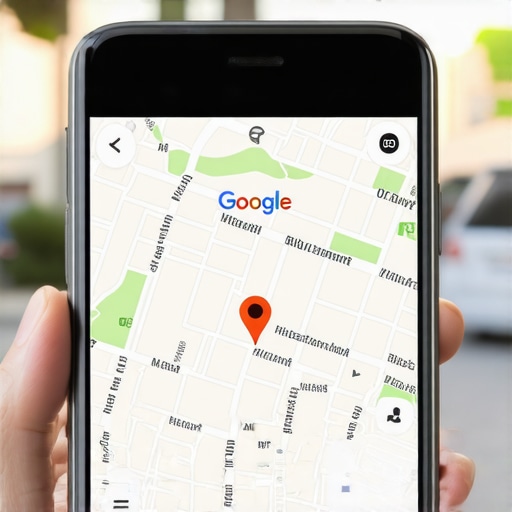
The Hidden Checklist Items That Actually Move Your Google Maps Pin
If you have been operating in the local search space for any length of time, you know the frustration. You’ve claimed your listing, you’ve verified your address, and you’ve uploaded a handful of decent photos. Yet, your business is stuck at position #4 or #5 – just outside the “Holy Grail” of the Local 3-Pack. You are visible, but you aren’t dominant.
As a Google Business Profile Product Expert, I see this “plateau” every single day. Most business owners and even many generalist SEO agencies are still playing by the 2022 playbook. They focus on NAP (Name, Address, Phone) consistency and basic keyword stuffing in the description. But as we move through 2026, the algorithm has evolved into a sophisticated, AI-driven machine that prioritizes entity-based relevance and behavioral signals over static data. To rank higher on google maps today, you have to look at the hidden levers that the average user never sees.
In this guide, I’m going to pull back the curtain on the technical checklist items that actually move your pin. We aren’t talking about “filling out your profile.” We are talking about google business profile seo at a surgical level. If you want to stop being “ghosted” by the Map Pack and start capturing the lion’s share of local leads, you need to master these advanced strategies.
Beyond NAP: The Entity-First Approach to Google Business Profile SEO
For years, the industry mantra was “NAP, NAP, NAP.” While consistency across the web still matters for baseline trust, Google’s transition to an “Entity-First” search engine has changed the game. Google no longer sees your business as just a collection of strings (text); it sees it as a “thing” (an entity) with specific relationships to other things – like locations, services, and consumer intent.
When you engage in google business profile optimization, your goal is to feed the Knowledge Graph. Google needs to be 100% certain that your business is the most authoritative entity to solve a user’s specific problem. This goes beyond your business name. It involves building a “semantic web” around your brand.
One of the most overlooked aspects of this is the Local Schema Move. Your website and your GBP must speak the same language. By implementing advanced JSON-LD schema on your site that mirrors your GBP data – specifically using sameAs attributes to link to your social profiles and areaServed properties – you solidify your entity status. This cross-referencing helps Google verify facts about your business without human intervention, which is critical in an era where AI filters are doing the heavy lifting.
The “Proximity Purge” and How to Fight It
In 2026, proximity remains the #1 ranking factor, but it has become more aggressive. We call this the “Proximity Purge.” You might rank #1 when standing in your office, but move three blocks away, and your local maps boost vanishes, replaced by a competitor. This happens because Google is trying to provide the most “hyper-local” result possible to minimize user travel time.
To fight the proximity purge, you need to expand your “radius of relevance.” You cannot change your physical location, but you can change how Google perceives your reach. Using a google maps ranking service can help, but you must also utilize a google maps rank tracker to visualize your visibility. I recommend using local seo tools like SEO Viper Tools to run a geo-grid report. This allows you to see exactly where your pin “drops off” the map.
Once you identify these drop-off points, the strategy is to create “Geo-Relevance signals.” This includes:
- Creating location-specific landing pages on your website that mention hyper-local landmarks, neighborhoods, and intersections.
- Uploading GBP photos that are taken in those specific “drop-off” neighborhoods (Google reads the metadata and AI-identifies landmarks).
- Encouraging reviews from customers located in those specific zip codes.
By effectively signaling that your business is the preferred choice for people in the surrounding 5 – 10 mile radius, you can overcome the 2026 Proximity Purge and maintain a steady rank across a wider geographic area.
The 10-Review AI Threshold & Velocity
Reviews have always been a cornerstone of google business profile ranking, but the way Google processes them has fundamentally shifted. In 2026, we have observed a “10-Review AI Threshold.” Our research indicates that for a business to be consistently featured in “AI Overviews” (Google’s AI-generated answers at the top of search), it must have a minimum of 10 high-quality, long-form reviews with high sentiment diversity.
It’s no longer enough to have a 4.8-star rating with 200 “Great service!” comments. Google’s AI now parses the content of the reviews to understand your service quality. To move your pin, you need “Review Velocity” and “Keyword-Rich Sentiment.”
The Strategy for Review Dominance:
- Velocity over Volume: Getting 50 reviews in one week and then zero for three months looks like manipulation. A steady drip of 2 – 3 reviews per week is a much stronger signal of a healthy, active business.
- The “Specifics” Prompt: When asking for reviews, don’t just ask for five stars. Ask customers to mention the specific service they received (e.g., “Emergency Pipe Repair”) and the neighborhood they are in. This creates a powerful gmb ranking service signal within the review itself.
- Sentiment Diversity: Google looks for variety. If every review uses the same language, it flags the profile. You want reviews that discuss different aspects of your business – price, punctuality, expertise, and cleanliness.
If you are struggling to get your reviews to stick, or if you’ve been hit by “Review Ghosting,” it might be time to look into local seo software that helps manage and solicit feedback in a way that aligns with Google’s updated 2026 guidelines.
Technical “Hidden” Items: The Secret Sauce of GBP Optimization
Now, let’s get into the weeds. These are the technical items that most SEOs miss because they are buried deep within the Google Business Profile dashboard or require external technical implementation.
1. Category Dilution vs. Primary Dominance
One of the biggest mistakes I see is “Category Stuffing.” While it’s tempting to add every secondary category that is remotely related to your business, this often leads to Category Dilution. Google’s algorithm assigns a “weight” to your primary category. Every secondary category you add takes a small percentage of that weight away. To rank google business profile listings effectively, you should only select 2 – 3 highly relevant secondary categories. If you are a “Plumber,” don’t add “Interior Designer” just because you occasionally install a faucet. Stick to the core services that drive your revenue.
2. The “Services” Menu as a Long-Tail Magnet
In 2026, the “Services” section of your GBP is essentially a hidden SEO goldmine. Google uses the custom descriptions you write for your services to match long-tail queries. If someone searches for “tankless water heater installation near me,” and your competitor just has “Plumbing” as a category, but you have a detailed “Tankless Water Heater Installation” service description, Google will prioritize your pin. Do not leave these descriptions blank! Use all 300 characters to describe the service, the benefits, and the brands you use.
3. Exif Data and the 2026 Photo Reality
There is a lot of debate about whether geo-tagging photos (Exif data) still works. In 2026, the answer is: Google ignores “forced” Exif data that you inject via software, but it heavily weighs “Organic Geo-Data.” This means photos taken on a smartphone with location services turned on carry massive weight. To boost your google business profile seo, encourage your field technicians to take photos of their work on-site and upload them directly from the Google Maps app. This provides an authentic GPS handshake that Google trusts implicitly.
4. Video Verification Loops
Verification has become the bane of many business owners. If you find yourself stuck in a loop where Google keeps asking for video verification but never approves it, you need Professional GMB Help. Often, the issue isn’t the video itself, but the lack of “Entity Proof” in the background (missing signage, no visible tools of the trade, or a mismatch between the video and the registered address). If your profile is flagged, you must recover a suspended Google Business Profile using a very specific documentation trail that proves your physical existence.
Behavioral Signals: Moving the Pin with Engagement
If two businesses have the exact same optimization, the same number of reviews, and are the same distance from the searcher, how does Google decide who is #1? The answer lies in Behavioral Signals. Google monitors how users interact with your pin. This is the ultimate “real-world” validation.
Key signals include:
- Click-Through Rate (CTR): How many people click your listing compared to the ones above or below it?
- Driving Directions: This is arguably the strongest signal for google maps ranking service success. When someone clicks “Directions,” it tells Google that your business is a destination, not just a digital listing.
- Click-to-Call: High call volume from the listing indicates high utility.
- Dwell Time on Photos: How long do people spend scrolling through your photos?
To improve these signals, you need to make your listing “sticky.” Use high-quality, professional cover photos. Post “Google Updates” (formerly Google Posts) at least twice a week with compelling offers to encourage clicks. Use gmb seo tools to monitor these engagement metrics. If your CTR is low, your pin will eventually drop, regardless of how many keywords you have in your description.
The 2026 Roadmap for Local Dominance
Local SEO is no longer a “set it and forget it” task. It is a continuous process of feeding the AI engine with high-quality, geo-relevant data and human engagement signals. To rank higher on google maps, you must treat your GBP as your most important digital asset – often more important than your website itself.
As we have discussed, moving your Google Maps pin requires a multi-faceted approach:
- Solidify your entity status with advanced schema.
- Combat the proximity purge with hyper-local content and geo-relevant photos.
- Maintain a healthy review velocity with specific, keyword-rich feedback.
- Optimize the technical “hidden” sections like the Services menu and categories.
- Drive behavioral signals through high-quality visual content and regular updates.
If you find the technicalities of google business profile optimization overwhelming, don’t hesitate to seek out a professional gmb ranking service. The landscape is changing too fast to rely on outdated methods. Using advanced local seo software like SEO Viper Tools can give you the data-driven edge you need to see through the “fog” of the algorithm and make the moves that actually result in more calls, more customers, and more revenue.
Your Google Maps pin is the front door to your business. It’s time to stop letting it sit in the shadows. Audit your profile against this hidden checklist today, and start moving your pin to where it belongs: the very top.
This post hits the nail on the head when it emphasizes the importance of technical SEO details that are often overlooked, like schema implementation and geo-tagged photos. I’ve seen firsthand how these ‘hidden levers’ can make a noticeable difference in local rankings. A question I have is regarding the ‘Proximity Purge’—has anyone tried specific geo-targeted content strategies to extend their relevance radius effectively? Personally, I’ve found that creating hyper-local landing pages with landmarks and encouraging reviews in targeted neighborhoods has helped some clients maintain visibility even in competitive areas. It seems like a lot of moving parts, but piecing together a well-rounded, entity-focused strategy like this feels like the way to truly dominate the 3-Pack in 2026. The challenge for many small business owners is how to prioritize these technical and behavioral signals without feeling overwhelmed, especially if they’re handling SEO in-house. What would you say are the most crucial ‘quick wins’ to start with, before moving on to more advanced tactics? Thanks for sharing such in-depth insights—these are the strategies that can really push a business past the plateau.
This post really highlights how far local SEO has come from traditional NAP-based tactics to a much more complex, entity-driven approach. I completely agree that technical elements like schema and geo-tagging are often overlooked but can have a substantial impact when correctly implemented. I’ve personally seen clients who mastered geo-relevant content and structured data climb higher in the 3-Pack, even in highly competitive markets. One thing I’d add is the importance of user engagement signals in tandem with technical SEO. For example, actively encouraging positive reviews from local customers and optimizing Google Posts seem to have a synergistic effect on rankings.
I’m curious, for those managing this in-house, what quick wins have you found most effective for getting started without feeling overwhelmed? Do you prioritize schema fixes or review campaigns first? It seems like a layered strategy—any tips on which aspect to tackle first for maximum impact?
The post really resonates with what I’ve seen in local SEO lately. Moving beyond the basics of NAP and focusing on entity relationships and behavioral signals has been crucial for my clients. I especially agree on the importance of technical schema and geo-relevant photos. I wonder, though, how much weight Google still gives to Exif data versus organically generated geo-data? In my experience, encouraging technicians to take photos directly through the Google Maps app yields better trust signals. Also, maintaining review velocity while ensuring diversity remains a challenging balancing act. Has anyone found tools or strategies to streamline review collection effectively without risking review ghosting? These advanced tactics can certainly seem overwhelming at first, but starting by optimizing the Services menu and encouraging reviews from local customers can produce quick wins. Would love to hear others’ thoughts on prioritization—what’s worked best for you in the early stages of implementing these hidden levers?
This post offers some solid insights into the often-overlooked technical and behavioral signals that can really move your Google Maps pin beyond basic optimization. I’ve personally seen clients benefit from focusing on geo-relevant content and building strong entity profiles through schema markup and review management. One thing I’ve experimented with is creating localized Google Posts centered around landmarks and neighborhood events, which seem to boost relevance signals for nearby areas. How do others balance the effort of creating hyper-local content versus optimizing existing profiles? For businesses with limited resources, would you recommend starting with review velocity or schema enhancements as a quick win? I find that reviews and photos taken directly via the Google Maps app from on-site staff often yield the best trust signals. Would love to hear if anyone has success stories with creative geo-relevance signals or specific strategies to fight the proximity purge effectively.
This post is a goldmine for anyone serious about pushing their Google Maps rankings in 2026. I’ve personally found that focusing on localized schema and encouraging on-site staff to upload geo-tagged photos directly via Google Maps really boosts trust signals. One challenge I face is balancing all these technical efforts with content creation, especially on a small team. Do you recommend tackling schema or review generation first for quick wins? Also, I’d love to hear experiences from others who have used geo-relevant landing pages or neighborhood-specific content—what has worked best? It’s clear that these hidden levers can make all the difference when trying to break out from the ‘plateau’ and secure that top spot in the pack. Thanks for sharing these advanced strategies; they really push beyond the basics and into true entity optimization.
Interesting insights here, especially around the ‘Proximity Purge’ and how it’s pushing businesses to think outside the box with geo-relevance signals. I’ve been experimenting with creating localized landing pages that highlight nearby landmarks combined with encouraging reviews from those specific neighborhoods. This seems to help Google associate your business more strongly with those areas, even if you’re physically located slightly outside the traditional radius. Has anyone else tested this approach or found other creative ways to extend relevance radius without relocating? It’s clear that in 2026, technical schema and behavioral signals are just as critical as traditional NAP, if not more so. Sometimes I wonder how much of Google’s algorithm still depends on organic geo-data from photos versus structured data like schema. Would love to hear success stories on balancing these elements effectively—especially for smaller businesses that can’t afford extensive campaigns. Also, what quick wins would you recommend to a local biz just starting to implement these advanced tactics? Thanks for the detailed post—definitely a game-changer.
This article really opens up a new perspective on local SEO, especially with the emphasis on behavioral signals and technical nuances like schema and geo-tagged photos. I noticed that encouraging technicians to upload photos directly from their smartphones, with location services enabled, has improved our trust signals quite a bit. I wonder, though, how much impact Exif data really has compared to organic geo-data from user-generated photos? In the past, I thought geo-tagged images added significant weight, but recent updates seem to shift that focus. Also, I’ve started creating neighborhood-specific landing pages that incorporate local landmarks and encourage reviews in those areas. Has anyone here seen a noticeable change in rankings when implementing hyper-local content combined with review strategies? I’d like to hear different approaches—what has your experience been with fighting the proximity purge effectively? It seems like a continuous game of fine-tuning these elements, but the payoff appears worth the effort.
This post really sheds light on how technical SEO and behavioral signals are becoming increasingly critical for local rankings. I’ve started implementing more geo-relevant content and encouraging spot-specific reviews, and I’ve seen some promising improvements in competitive areas. The concept of ‘Geo-Relevance signals’ really resonated with me, especially creating landing pages that reference local landmarks and including neighborhood keywords. It’s interesting to see how Google’s AI is prioritizing these signals now. I’m curious, for small businesses trying to optimize in-house, which of these ‘hidden’ factors would you recommend tackling first? Should the focus be on schema, review velocity, or geo-tagging photos? In my experience, consistent review collection combined with authentic geo-tagged photos makes the biggest difference in our local pack rankings. Would love to hear others’ strategies on balancing these efforts effectively without feeling overwhelmed.
This article really underscores how much local SEO has evolved beyond just claiming your listing and uploading photos. The focus on technical schema, geo-relevant content, and behavioral signals like CTR and reviews is revealing the depth required today. I recently started creating neighborhood-specific landing pages that incorporate local landmarks and encouraged reviews from residents in those areas, and the impact has been noticeable in rankings. It’s like building a web of relevance that Google’s AI picks up on. One challenge I face is balancing these efforts without spreading resources too thin, especially for small teams. Do you think focusing on review velocity and local content first provides the best early gains, or should I prioritize technical schema updates? I’d love to hear how others are managing their priorities and what quick wins have delivered the most results for you.
I really appreciate this in-depth look at the technical aspects often overlooked in local SEO. One thing I’ve been experimenting with is integrating specific local landmarks and neighborhood keywords directly into my landing pages, along with geo-tagging photos taken on-site. It seems to help Google associate the business with broader local relevance, especially when trying to beat the proximity bias. It’s fascinating to see how the AI now prioritizes signals like review diversity and engagement metrics over just basic NAP data. I’m wondering, for small businesses managing these tactics in-house, what would you all say is the most feasible starting point? Should they first focus on building review velocity or optimizing their schema markup? Personally, I believe that easy wins like optimizing the Services description and encouraging geo-tagged photos can provide quick movement up the ranks without overhauling the entire profile. Would love to hear others’ experiences or recommendations on where to get the best bang for the buck in the beginning stages of this advanced approach.
This article underscores the importance of technical SEO and behavioral signals in moving the needle for Google Maps rankings. I’ve seen firsthand how implementing localized schema and encouraging genuine geo-tagged photos can make a significant difference, especially in combating the proximity purge. The challenge I often encounter is streamlining review collection while maintaining diversity in review content. Does anyone have effective tools or processes for managing review prompts without risking ghosting or spam flags? Also, I find that creating neighborhood-specific landing pages with local landmarks and encouraging targeted reviews have been effective strategies. Do others have experience integrating these localized content efforts with schema markup for a more cohesive entity profile? It’s clear that a balanced approach across technical, content, and engagement signals is the way forward—what’s been your most successful quick win when trying to break through a plateau in local rankings? Would love to hear insights from the community.