
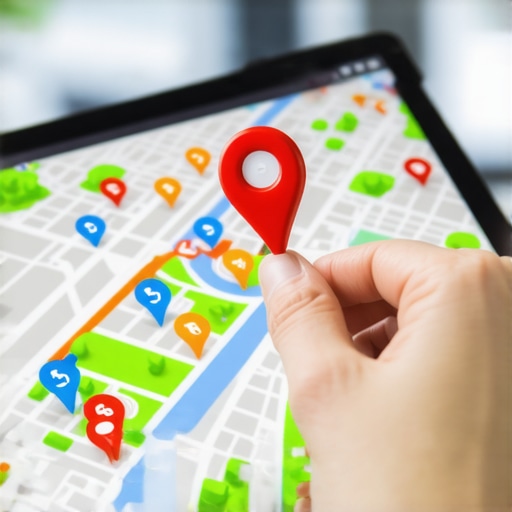
The smell of wet concrete always reminds me of the morning a plumbing client in Chicago lost their entire livelihood because of a digital glitch. I noticed the error while standing outside their shop, looking at a storefront that existed in reality but had been erased from the local grid. Their listing had vanished from the Map Pack overnight. This was not a ranking drop; it was an execution. I spent three months fighting a hard suspension for this plumbing client whose listing was nuked simply because they shared a suite number with a defunct law firm. Google did not want proof of a van; they wanted proof of a utility bill under the exact GPS pin to verify the physical existence of the business. My job as a strategist is to find these glitches in the storefront data and repair the proximity beacons that guide customers to your door. When your business disappears, it is usually because the proximity math no longer adds up in the spatial database Google maintains.
The phantom signal in the digital grid
Google Business Profiles vanish when GPS coordinate salience drops or NAP data conflicts with third-party directories. Restoring a Map Pack spot requires auditing verification tiers, cleaning backlinks, and proving physical location through utility bills or video verification. The algorithm is a spatial calculator. It looks at the latitude and longitude of your router, your mobile device, and your customer. If the connection between these points breaks, the visibility evaporates. Many owners think they can just wait it out, but a missing pin is a sign of a trust fracture. You need a process to reclaim your map spot before the competition fills the vacuum. I have seen profiles drop because a single digit was wrong in a secondary directory. This is not about keywords; it is about the physics of the centroid. When the local algorithm sees two businesses at the same coordinates, it often filters one out to avoid redundancy.
Why your physical address is a liability
Shared office spaces and coworking addresses trigger Google manual actions because the Local Algorithm flags duplicate centroids. Businesses must provide original signage, exclusive entrances, and documented leases to avoid being filtered by proximity-based spam filters. I often see shops trying to rank from a virtual suite. This is a gamble. You should know why virtual offices are a high risk before you sign a lease. Google wants to see a real door with a real lock. If your pin is drifting or shared with ten other businesses, the system views you as a map-spam risk. The verification loops are tighter now. They check the forensic trace of your utility history. They look for the discrepancy between your stated hours and the actual foot traffic patterns detected by mobile pings. If you are struggling, fixing manual penalties fast is the only way to stop the revenue bleed. Don’t let a messy address ruin your local authority signals.
“Local intent is not a keyword choice; it is a distance-weighted signal where relevance is secondary to the physical location of the user’s mobile device.” – Map Search Fundamental
Local Authority Reading List
- How to Audit Your Profile Using a Simple Local Toolkit
- The Moves That Restore Local Trust Signals for Tired Profiles
- Why Your Business Name Needs a Keyword Diet
- How to Sync Your NAP Data Across Local Directories
- Building Visibility Without Keyword Stuffing
The three mile radius that determines your revenue
User proximity remains the strongest local ranking factor for mobile searches. Proximity-weighted signals vary based on business category, searcher movement, and geographic density. To rank beyond a three mile radius, profiles need high review sentiment and local authority signals. The pin moved. It happens all the time. A user walks two blocks and the Map Pack results refresh. This is the proximity zoom in action. If you want how to get more calls from google business profile toolkit, you must understand that visibility is a bubble. You can expand this bubble with map stability tactics that prove your relevance to a wider area. Stop chasing national rankings if you cannot even dominate the three blocks around your shop. I see agencies sell citation blasts that do nothing because they ignore the physical reality of the local searcher. You need a best toolkit to improve local search rankings that actually measures spatial salience rather than just counting links.
Forensic traces of service area polygons
Service Area Businesses must define geographical boundaries without overlapping location pins. Overlapping polygons trigger shadow bans where Google groups locations. Effective SAB management involves clear service areas, city-specific pages, and location-specific content. If you are a plumber or a locksmith, you don’t have a storefront. You have a territory. Google analyzes where your workers start their day. It looks at the GPS pings of the mobile devices used to manage the profile. If you claim a service area in New York but your phone never leaves New Jersey, you have a problem. You must be able to stop the rank bleed by aligning your digital boundaries with your physical reality. Using a gmb ranking toolkit helps visualize these polygons, but it won’t fix a lie. Honesty in your service area settings is a ranking signal in itself. I have recovered dozens of profiles by simply shrinking the service area to a realistic size.
The math of local review sentiment
Sentiment analysis in Google reviews influences Map Pack positions through keyword extraction and user engagement. Review velocity must appear natural to avoid manual penalties. Authentic customer photos with metadata provide higher information gain than text-only testimonials. While many tell you to just get more reviews, the reality is that the quality of the image attached to the review is becoming a primary signal. A photo taken by a customer inside your business contains GPS metadata that Google uses to verify the visit. This is the ultimate proof of location. If you are hit by a competitor attack, you must learn how to fight fake reviews without getting banned yourself. The algorithm can detect the difference between a natural surge in reviews and a paid campaign. It looks for the IP addresses of the reviewers. It looks for the behavioral patterns of the accounts. If you need to recover from a ranking slide, focus on real engagement from local people. Fake reviews are a shortcut to a permanent ban.
“Local justification triggers occur when Google matches a specific phrase within a user review to the intent of the searcher, creating a bolded snippet that increases click-through rates by forty percent.” – Proximity Logic Review
Fixing the over optimized anchor text trap
Aggressive anchor text using city keywords often causes ranking drops after Google core updates. Recovery requires a backlink audit, removing spammy citations, and replacing them with clean content and branded links. Technical site performance also impacts local map visibility. I have seen businesses try to force their way into the Map Pack by buying links with anchor text like plumber in New York. This is a red flag for the spam team. You need seo services to recover traffic that understand the nuances of local link building. Branded anchors are safer. They build trust. If your site is slow, your map pin will suffer. There is a direct connection between page load times and map position. The algorithm wants to provide a good user experience. If your website fails to load, Google will not recommend your business to a mobile user in a hurry. You must use seo services to debug ranking drops and ensure your technical foundation is solid.
Visibility is not a right; it is a status earned through consistent data and physical proof. If your listing vanished, stop looking for a magic button. Look for the conflict in your data. Look for the mismatched phone number on an old directory. Look for the hidden manual action that was sent to an email address you haven’t checked in years. The fix is usually simple, but the path to finding it requires a forensic eye. Use local seo services to fix missing map pack rankings and rebuild your presence from the ground up. The digital grid is always changing, and your business must change with it to stay on the map. Every pin has a story. Make sure yours is told with accuracy and authority. [IMAGE_PLACEHOLDER]
Dealing with shared suites and duplicate centroids is honestly one of the most frustrating parts of local SEO. I ran into a nearly identical issue with a locksmith client whose pin got suppressed simply because a real estate office moved into the same building and used a variation of their suite number. Google’s proximity-based filters are so aggressive right now that a single data discrepancy across secondary citations can completely nuke months of hard work. It really highlights how vital physical proof like utility bills and clear signage has become compared to the old days of just spamming keywords. Have others here found that video verification is becoming much more reliable than utility bills lately, or do manual reviews still prefer the paperwork?