
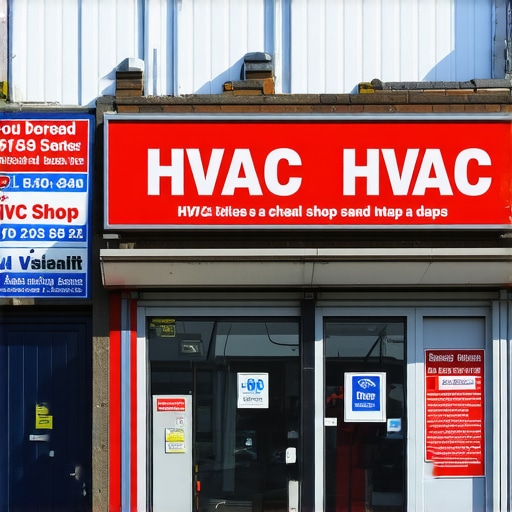
The Simple Move That Puts Your HVAC Shop Ahead of Local Competitors on Maps
The scenario is all too common in the HVAC world. You’ve spent fifteen years building a reputation for excellence. Your technicians are NATE-certified, your trucks are clean, and your customer service is second to none. Yet, when a homeowner in your own zip code searches for “AC repair near me,” your shop is nowhere to be found. Instead, the “Map Pack” – those top three coveted spots on Google Maps – is occupied by a “messy” competitor with half your experience and a trail of mediocre reviews. It’s frustrating, it’s demoralizing, and most importantly, it’s costing you tens of thousands of dollars in lost seasonal contracts.
In the current digital landscape, google business profile seo is no longer an optional “marketing extra.” It is the lifeline of your local lead generation. Data shows that 46% of all Google searches now have local intent, and your Google Business Profile (GBP) drives approximately 75% of all local business visibility. If you aren’t in those top three spots, you effectively don’t exist to three-quarters of your potential market. Most HVAC shop owners are invisible in the Map Pack because they are playing by 2018 rules in a 2026 environment.
The “Simple Move” that separates the dominant HVAC titans from the struggling shops isn’t about buying more fake reviews or stuffing your business name with keywords. It is the fundamental shift from “static optimization” to dynamic engagement and hyperlocal relevance. While your competitors are setting their profile and forgetting it, you need to turn your GBP into a living, breathing extension of your service area. This guide will show you exactly how to do that. If you’re tired of being overlooked, it’s time to Stop Chasing Clicks and Start Getting Actual Phone Calls From Your Local Profile.
Section 1: The 2026 Local SEO Reality Check
The days of simply having a consistent Name, Address, and Phone number (NAP) and calling it a day are officially over. As we move through 2026, the algorithm has undergone a massive transformation. We are now living in the era of the “Proximity Purge.” Google’s AI-driven radius caps have become incredibly aggressive. In the past, an HVAC shop in a suburb could easily rank for the major city ten miles away. Today, Google is actively hiding shops from searchers who are just a few miles outside of a very tight, AI-defined service radius.
This shift means that google business profile seo is now a game of proving your physical presence and activity within specific micro-neighborhoods. Google’s AI audits are now sophisticated enough to detect “ghost offices” and “virtual suites” that many HVAC companies used to game the system. If you aren’t showing real-world activity – technicians moving, jobs being completed, and photos being uploaded from the field – the algorithm assumes you aren’t the best local match for the searcher.
Furthermore, proximity is now the #1 ranking factor. However, proximity isn’t just about where your office is located; it’s about where your authority is located. If you want to expand your reach beyond your front door, you have to understand How the 2026 Local SEO Trends Are Changing the Way Small Shops Rank. The “Proximity Purge” is designed to favor businesses that demonstrate high levels of local engagement. If your profile is static, you will be filtered out in favor of a competitor who is actively signaling their presence in the searcher’s immediate vicinity.
Section 2: The “Simple Move” – Hyperlocal Service Area Precision
The biggest mistake HVAC owners make is claiming a service area that is too broad. They select three entire counties and fifty zip codes, thinking that “more is better.” In reality, this dilutes your local authority and leads to what we call “Proximity Bleed.” When you tell Google you serve everyone everywhere, Google’s AI becomes skeptical that you are the best provider for a specific street or neighborhood.
The “Simple Move” is to pivot your strategy toward Micro-Service Areas. Instead of trying to be the king of the county, you need to be the undisputed authority of specific high-value neighborhoods. This starts with your GBP settings. You must accurately define your service areas not just by broad regions, but by the specific clusters where your trucks are most active. To rank higher on google maps, you need to align your digital footprint with your physical tire tracks.
How to Execute Micro-Service Area Optimization:
- Audit Your Categories: Ensure your primary category is “HVAC Contractor,” but don’t ignore secondary categories like “Air Conditioning Repair Service,” “Heating Contractor,” and “Air Conditioning Installation Service.”
- Define the Radius: Use the “Service Area Business” (SAB) settings to highlight the 10-15 zip codes where you actually want to win.
- Localized Service Pages: Create pages on your website specifically for these micro-neighborhoods and link them back to your GBP.
By focusing on precision, you stop the algorithm from guessing where you are. You provide clear, undeniable signals that you are the local expert for a specific radius. This is the foundation of Stop the Proximity Bleed: Map Rank Services That Actually Grow Your Service Area. When you dominate the micro-level, the macro-level ranking follows as a natural byproduct of your increased authority.
Section 3: Visual Proof – The 4 Photo Fixes
Most HVAC shops treat their GBP photos like a digital scrapbook. They upload a blurry photo of a furnace from 2019 and a stock image of a smiling family that clearly doesn’t live in their town. This is a massive missed opportunity. In 2026, photos are a primary ranking signal, not just “eye candy.” Google Vision AI analyzes every image you upload to identify objects, text, and even the sentiment of the people in the frame.
High-quality, geo-tagged photos of your actual work build a level of trust with Google’s AI that text descriptions simply cannot match. When you upload a photo of a branded HVAC truck parked in a recognizable local neighborhood, Google notes the location data (metadata) and the visual landmarks. This confirms your service area claims. If you want your pin to pop, you need to implement these 4 Simple Photo Fixes That Make Your Business Pin Pop on Mobile Screens.
The 4 Photos Every HVAC Shop Needs:
- The Branded Fleet: Photos of your trucks in front of local landmarks or on residential streets. This proves you are physically present in the community.
- The “Before and After”: Google loves “problem and solution” imagery. A messy old unit replaced by a gleaming new install shows competence.
- The Human Element: Photos of your technicians in uniform, preferably with a happy customer. This builds “E-E-A-T” (Experience, Expertise, Authoritativeness, and Trustworthiness).
- The Team at the Shop: Even if you are a Service Area Business without a showroom, photos of your team meeting or loading up for the day prove you are a real, operational entity.
Consistency is key here. Uploading 20 photos once a year is useless. Uploading 2-3 photos every week signals to Google that your business is active and thriving. This “Review Velocity” of visual content is a secret weapon for HVAC shops looking to leapfrog their competitors.
Section 4: The Review Engine & Ethical Velocity
We all know reviews are important, but most HVAC owners focus on the wrong metric. They look at the total number of reviews. While a high number is good, Google cares more about Review Velocity (how often you get reviews) and Review Diversity (what the reviews actually say). If you got 50 reviews three years ago and nothing since, your profile is “stale” in the eyes of the algorithm.
To truly dominate, you need a google maps ranking service strategy that focuses on consistent, high-quality feedback. The “Ethical Move” is to integrate review requests into your technician’s workflow. The best time to get a review isn’t three days later via an automated email; it’s while the technician is still in the driveway and the homeowner is enjoying their newly cooled living room. This is The Ethical Move to Get Clients to Actually Leave a Review Before They Leave Your Office (or in this case, your job site).
The Anatomy of a High-Ranking Review:
A review that just says “Great job!” is okay. A review that says, “John from [Your Shop] came out to repair our AC in Springfield and was very professional,” is gold. Why? Because it contains keywords and location data naturally. Encourage your technicians to ask customers to mention the specific service they received. This creates a semantic link between your business, the service (AC repair), and the location (Springfield), which significantly boosts your google business profile ranking.
Don’t be afraid of the occasional 4-star review, either. A profile with 500 reviews and a perfect 5.0 rating often looks suspicious to both Google and savvy homeowners. A 4.8 or 4.9 rating with detailed, descriptive reviews is far more powerful for local lead generation than a “perfect” but thin profile.
Section 5: Technical Tactics – Embeds and Schema
While much of GBP optimization happens within the Google dashboard, your website plays a critical role in how your Map pin performs. There is a “Simple Embed Trick” that many SEO agencies charge thousands for, but you can do it yourself. It involves creating a “relevance loop” between your website and your Google Map.
Every HVAC shop should have dedicated pages for their primary service cities. On these pages, you should not only list your services but also embed your actual Google Maps CID link. This tells Google, “This website page about HVAC repair in [City] is directly connected to this Google Business Profile.” Using local seo tools to track these embeds can show you exactly how much weight they carry in your ranking journey.
Implementing the Relevance Loop:
- Map Embeds: Don’t just embed a static map of your city. Embed your specific business listing map.
- Local Business Schema: Ensure your website’s code includes “LocalBusiness” structured data. This should include your exact NAP, your opening hours, and your service area.
- The “Service Area” Page: Create a page that lists every neighborhood you serve, and link each neighborhood to a relevant blog post or gallery of work you’ve done in that area.
This technical foundation is the backbone of The Simple Embed Trick That Actually Makes a Difference for Google Maps Growth. It bridges the gap between your “on-page” SEO and your “off-page” Map presence, making it much harder for competitors to knock you out of the top spot.
Section 6: Troubleshooting – Why Your Pin Disappeared
Sometimes, you do everything right, and your pin still vanishes or gets stuck on page 4. This is often due to technical blockers or “search suppression.” One of the most common issues in 2026 is the “Verification Wall.” Google has become incredibly strict with HVAC companies because the industry has historically been plagued by lead-gen spammers. If you find yourself in a verification loop – where Google keeps asking for more proof – you need a plan.
If your profile has been suspended or your visibility has tanked overnight, check this quick list from The Maps Troubleshooting Guide for When Your Verification Gets Stuck:
- Address Consistency: Does your address on your website, Yelp, and Facebook match your GBP exactly? (e.g., “Suite 100” vs “#100”).
- Category Conflicts: Are you using too many categories that don’t relate to your core business?
- The “Shadow” Profile: Do you have an old, unverified profile for the same business floating around? Google hates duplicate data.
- Proximity Filter: Did a new competitor open an office closer to the city center? If so, you need to double down on your “Review Velocity” and “Visual Proof” to overcome their proximity advantage.
Troubleshooting is part of the process. The HVAC market is competitive, and Google’s filters are designed to be aggressive. Staying ahead means being proactive about your profile’s health and responding immediately to any warnings or drops in performance.
Conclusion: Dominating the Map Pack in 2026
Dominating the Map Pack isn’t about one single “hack.” It’s about the cumulative power of small, strategic moves. By shifting your focus to hyperlocal precision, maintaining a high review velocity, and providing constant visual proof of your work, you build a “moat” around your HVAC business that competitors will find impossible to cross. Remember, 46% of your customers are looking for you on Maps right now. If you aren’t there, you are handing that revenue to someone else.
The “Simple Move” is to stop treating your Google Business Profile as a yellow-pages listing and start treating it as your most valuable sales asset. Whether you do this yourself or hire a google business profile optimization expert, the time to act is now – before the next heatwave or cold snap hits and your phones stay silent.
If you’re ready to see exactly where your shop stands and how to crush the competition, let’s get to work. Contact Us today for a full audit of your local presence. Let’s put your HVAC shop back where it belongs: at the very top of the map.
This post really hits home for me. As someone who’s been in the HVAC industry for over a decade, I’ve seen many shops struggle to move past the basic local SEO tactics. What really resonated was the emphasis on geotagged photos and activity-based signals—these are often overlooked but can make a huge difference in how Google perceives your presence in the community. I’ve started implementing more localized service pages and actively uploading photos from job sites, and I’ve already noticed my profile gaining more traction in specific neighborhoods. My question is: for shops that serve multiple dense neighborhoods, how do you recommend balancing content and reviews across those different areas without overextending or diluting your efforts? Would love to hear strategies from others who are trying to master hyperlocal engagement without spreading themselves too thin.
This article really underscores how crucial active management of your GBP is in 2026. A lot of HVAC shops overlook the importance of real-time updates and geo-tagged photos, thinking once they set up their profiles, that’s enough. But recent experience has shown me that consistently uploading localized images, especially of trucks at local landmarks and completed jobs in specific neighborhoods, can significantly improve visibility. It’s like building a digital presence that directly mirrors where your trucks are on the ground. Regarding shops serving multiple dense neighborhoods, I’ve found that creating separate service pages for each area and linking them back to your GBP helps maintain clarity and focus. Has anyone experimented with using community-focused content or local events to boost engagement further? I’m curious about innovative strategies to get more reviews and active signals from various neighborhoods without spreading too thin. Would love to hear what’s worked for others.
This post really hits the nail on the head. I’ve been running an HVAC business for over 12 years, and I can attest that static profiles simply don’t cut it anymore. Engaging with your local community through geo-tagged photos and creating dedicated pages for neighborhoods is a game-changer. I’ve noticed that when we upload real-time photos of our trucks at job sites and include customer testimonials mentioning their neighborhood, our visibility on Google Maps improves noticeably. The trick is ensuring these efforts are consistent and genuinely relevant. One challenge I faced was balancing the volume of localized content without overextending my team. To manage this, I focused on key neighborhoods that generate the most leads and created specific service pages for those areas. Has anyone found success with neighborhood-specific reviews? I’d love to hear how others encourage reviews that mention specific locations and services—it’s been a bit of a challenge in my experience.
The insights shared in this post really resonate with what I’ve experienced running a local HVAC business. Focusing on micro-neighborhoods and actively engaging in real-time updates through photos has genuinely shifted our local visibility. I especially agree with the emphasis on geo-tagged images and the importance of consistent visual proof—those visual signals seem to carry a lot of weight with Google’s AI nowadays. One thing I’ve been pondering is how to optimize review collection across multiple dense neighborhoods without seeming pushy or cluttering the process. We’ve started targeting specific requests for reviews mentioning particular areas, but I wonder, what are some creative ways others have found to get natural, location-specific reviews? Additionally, creating dedicated service pages for different neighborhoods has worked well for us, but keeping the content fresh and relevant across all of them is a challenge. Would love to hear tips or success stories from others who have managed to scale hyperlocal engagement effectively without spreading their team too thin.
I really appreciate how this post emphasizes the importance of hyperlocal engagement in 2026. From my experience managing a small HVAC team, I’ve seen firsthand how creating specific neighborhood pages and consistently updating with geo-tagged photos enhances our visibility. Uploading photos of trucks at local landmarks or completed installations in targeted areas really helps Google associate our brand with those communities.
One challenge I’ve run into is maintaining a steady flow of fresh content and reviews across multiple neighborhoods without stretching my team too thin. We’ve experimented with automation tools for review requests and localized content scheduling, which seem to work well. To others managing multiple dense neighborhoods, what tactics have you found most effective for scaling outreach and review generation without losing personal touch or quality? Would love to exchange ideas on balancing growth and relevance.
This post really hits the core of what many HVAC businesses overlook—hyperlocal engagement. I’ve found that focusing on micro-service areas not only improves Google Maps rankings but also builds stronger community trust. Uploading geo-tagged photos of trucks and jobs completed in specific neighborhoods dramatically increases local trust signals, especially when combined with team photos and customer reviews mentioning neighborhoods directly. One challenge I’ve faced is balancing content creation across multiple areas without spreading my team too thin. I started creating dedicated local pages for each neighborhood and linked social proof back to those pages. It’s a slow process, but I believe consistency and real-world activity matter most. Have others experimented with local events or sponsoring community activities to boost reviews and local signals? Would love to hear ideas on scaling hyperlocal efforts without losing authenticity or quality.
This post really hits the mark for me. As an owner of a growing HVAC company, I’ve seen firsthand how important it is to treat your GBP as an active, living asset rather than a static listing. The tips on geo-tagged photos and micro-neighborhood pages have already helped boost our local visibility, especially in the last few months. One thing I’ve noticed is the importance of local community involvement—sponsoring neighborhood events and showcasing those moments on social media seems to generate not only reviews but also a stronger reputation. Have others found that participating in local activities directly correlates with review velocity and trust signals? Additionally, balancing efforts across multiple neighborhoods can be challenging. We’ve started focusing on high-impact areas first and gradually expanding as we see results. I’d love to hear other strategies that have helped scale hyperlocal engagement without overwhelming your team or diluting your efforts.
This post really nails it when it comes to the importance of hyperlocal engagement for HVAC businesses. From my own experience, actively updating Google My Business with geo-tagged photos and creating dedicated neighborhood pages drastically improves local visibility. I’ve also seen success by encouraging technicians to ask for detailed, location-specific reviews immediately after completing jobs. It’s a simple yet powerful move that builds trust signals and enhances your profile’s relevance in targeted areas. One thing I’m curious about is how others manage content and review growth when serving multiple densely populated neighborhoods. Do you find it better to focus on just a few neighborhoods at a time, or do you create separate profiles for each? Also, have you experimented with local sponsorships or community events to boost reviews and engagement? I’d love to hear your strategies for scaling hyperlocal efforts without stretching your team too thin.
This article hits the nail on the head regarding the importance of moving beyond static GBP profiles. I’ve seen firsthand how uploading geo-tagged photos of trucks and job sites within specific neighborhoods not only boosts trust signals but also helps Google understand exactly where your authority lies. One thing I’ve experimented with is creating hyperlocal blog content that highlights recent work in targeted areas, linking these pages back to the GBP. It seems to complement the visual proof well and enhances local relevance.
That said, I still wonder about balancing review generation across several densely packed neighborhoods. Has anyone found effective ways to encourage reviews that are both honest and location-specific without seeming pushy? Also, how do you manage to keep your Google Maps content fresh when juggling multiple micro-areas? Would love to hear strategies from others who are actively scaling their hyperlocal influence without overextending their team.
This post makes a compelling case for the evolving nature of local SEO, especially for HVAC businesses. I’ve personally seen how micro-local strategies, like geo-tagged photos and neighborhood-specific pages, can really boost visibility and trust in targeted communities. I’m curious, though, about how others handle managing reviews and engagement across multiple tight-knit neighborhoods without overextending their team. Do you focus on one area at a time, or do you create separate profiles for each? Additionally, I’ve found that participating in local events or sponsorships can subtly encourage more reviews and build rapport—has anyone experimented with this approach? It seems that combining active community involvement with hyperlocal content could be a powerful way to reinforce local authority and stand out against less active competitors.
This post really sheds light on how vital active engagement is in today’s local SEO landscape. I’ve personally started shifting from listing my services broadly to focusing on micro-neighborhoods with dedicated service pages and geo-tagged photos. It’s fascinating how consistent activity — like updating photos and gathering reviews from local customers — significantly boosts our Google Maps visibility. What I’ve found particularly challenging is maintaining this level of activity across multiple dense neighborhoods without overloading my team. We’ve begun automating review requests and scheduling regular updates, but I wonder, what third-party tools or strategies have others found effective for scaling hyperlocal engagement organically? Also, do any of you have creative methods for encouraging reviews that mention specific neighborhoods without seeming pushy? Looking forward to hearing how others are balancing quality and quantity while truly dominating their local markets.